7 Best Walking Pads of 2026 for Under-Desk Use
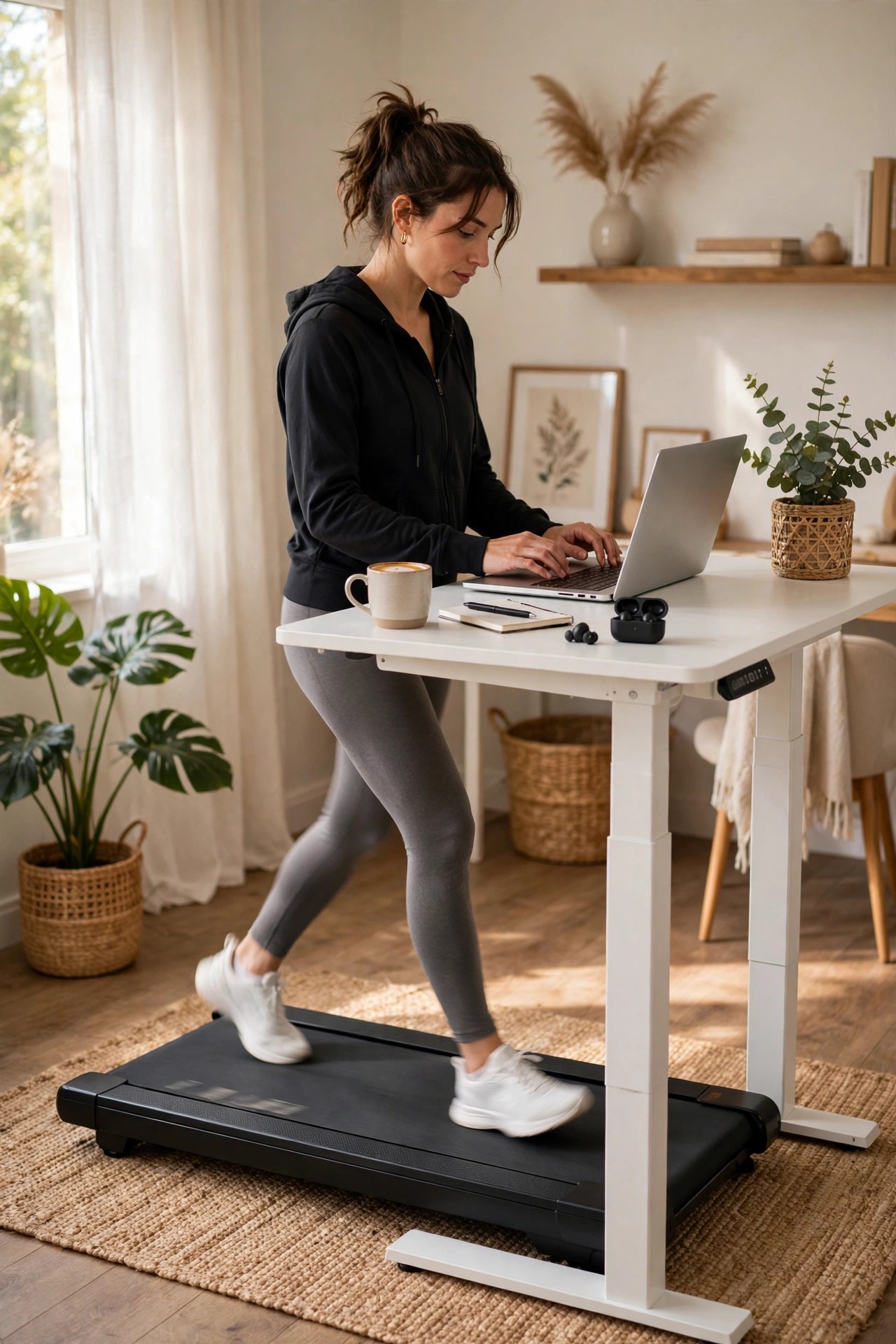
A walking pad is the lowest-friction fitness purchase you can make: slide it under a standing desk, walk at 2 mph while you answer email, and quietly bank 8,000–10,000 steps before lunch. No gym commute, no weather excuses, no handrails to bump your desk.
The category is crowded with lookalike models and inflated specs. We compared the seven walking pads worth buying in 2026. Top speed, weight capacity, noise, and folded size decided the ranking. Reviews also reveal what a month of daily use teaches you. You learn how the belt feels, whether the app is any good, and which 2-in-1 models can genuinely handle a jog.
Quick picks
- Best overall: WalkingPad C2 — folds completely flat, long belt, ~$350–$600.
- Best budget: Sperax 2.5HP — whisper-quiet claimed <45 dB, ~$170–$230.
- Best 2-in-1 value: UREVO Strol 2E — walk + jog to 6.2 mph, ~$170–$280.
- Best with incline: UREVO CyberPad — powered incline, dual brushless motors, ~$500.
- Best for tiny spaces: Egofit Walker Pro M1 — smallest footprint, fixed 5% incline, ~$399.
- Best ultra-budget compact: DeerRun Q1 Mini — often under $150 on sale.
- Best for jogging: GoPlus 2-in-1 — runs to 7.5 mph, folds flat, ~$290.
Comparison table
| Model | Top speed | Weight capacity | Motor | Noise | Folded size | Price |
|---|---|---|---|---|---|---|
| WalkingPad C2 | 3.7 mph | 220 lbs | 2.0 HP brushless | ~65 dB* | 32.5″ × 20.4″ × 5.4″ | ~$350–$600* |
| Sperax 2.5HP | 3.8 mph | 350 max / 265 rec.* | 2.5 HP | <45 dB (claimed) | Doesn't fold; 3.5″ slim | ~$170–$230 |
| UREVO Strol 2E | 6.2 mph (run) / 4 mph (walk) | 265 lbs | 2.25 HP | Not published | 51.2″ × 22.6″ × 4.6″ | ~$170–$280 |
| UREVO CyberPad | 4.0 mph | 242–400 lbs* | 2.5 HP dual brushless | <35 dB (claimed) | Folds flat* | ~$500 |
| Egofit Walker Pro M1 | 3.1 mph | 220 lbs | 2.0 HP | <70 dB (claimed) | Doesn't fold; 38.4″ × 21.9″ | ~$399 |
| DeerRun Q1 Mini | 3.8 mph | 265 lbs | 2.5 HP | <45 dB (claimed) | Compact; 41.8 lbs | ~$150–$250* |
| GoPlus 2-in-1 | 7.5 mph (run) / 2.5 mph (walk) | 265 lbs | 2.25 HP | Not published | 52″ × 27″ × 5″ | ~$290 |
*Marked figures are uncertain: WalkingPad C2's price varies widely by retailer ($350–$600 typical street range); Sperax lists a 350-lb max but recommends 265 lbs — go by the lower number; UREVO's CyberPad capacity is listed as 242 lbs in some specs and 400 lbs in others; DeerRun pricing moves constantly with sales. Noise figures are manufacturer claims unless noted — treat "whisper-quiet" marketing with healthy skepticism and check return policies.
How to choose a walking pad
1. Be honest about speed: walking vs. jogging
Under-desk walking happens at 1.5–2.5 mph. Faster than that, typing gets sloppy. For desk use a 3.7–4 mph top speed is plenty, so spend the difference on noise and size. Jogging changes the requirements. You need a 2-in-1 with handrails and at least 6 mph, like the UREVO Strol 2E or GoPlus 2-in-1. Do not jog on a handrail-free pad. People fall off that way.
2. Noise matters more than you think
This will run during your video calls. Manufacturer dB claims are optimistic, though the relative ranking holds. Brushless motors in the WalkingPad C2 and CyberPad run quieter and cooler than brushed ones. Anything under ~60 dB keeps you off mute on Zoom. Pads with thin belts on hard floors transmit vibration. A mat helps with any model.
3. Measure your storage spot, not your room
The killer feature of a walking pad versus a treadmill is disappearing after work. Folding-flat models slide under beds and couches. The WalkingPad C2 is 5.4 inches thick, the GoPlus 5 inches. Non-folding slim models like the Sperax at 3.5 inches and Egofit lean against a wall. Measure the actual gap before you buy. Marketing copy says fits under most furniture. That phrase is doing a lot of work.
4. Weight capacity is a durability proxy
Capacity is about more than your body weight. It is about how hard the motor works every day. A 220-lb-rated pad carrying a 200-lb walker runs near its limit and will wear faster and louder. If you're over 200 lbs, favor 265-lb+ models (Sperax, UREVO, DeerRun, GoPlus).
5. Belt length for your stride
Walking needs less belt than you'd think. Taller users still notice the difference. At 6'0"+, prefer 47"+ belts (WalkingPad C2). The Egofit's 34" belt is fine for shorter walkers but feels cramped if you're tall. For jogging, 40"+ is the minimum sane length.
Full reviews
WalkingPad C2 (KingSmith)
The C2 is the original flat-folding walking pad and still the reference design. It folds 180° to just 5.4 inches thick and weighs 55 lbs with transport wheels. The 47.2" × 15.75" belt is the longest here, so tall walkers won't feel cramped. The brushless motor runs cooler and quieter than the brushed motors in budget pads, which matters for daily multi-hour use.
Heavier users should skip to the UREVO or GoPlus sections, because 220 lbs is the lowest capacity here. Speed control moves in 0.5 mph jumps, which means no dialing in between 2.0 and 2.5. The foot-sensing auto-speed mode is a gimmick. And the price bounces around, roughly $350 to $600 depending on where and when you buy.
- Folds completely flat — best storage of any pad here
- Long 47" belt suits taller walkers
- Brushless motor: quieter, cooler, longer-lived
- 55 lbs with wheels — genuinely portable
- 220-lb capacity limits heavier users
- 0.5 mph speed increments feel coarse
- Price swings wildly by retailer
Prices change frequently — the button checks the live price.
Sperax 2.5HP Walking Pad
Sperax owns the budget end of Amazon's walking-pad charts. Street price is routinely $170–$230 with sub-45 dB claimed operation. At 27 lbs with a 3.5" profile it is the easiest pad here to shove under a couch. The 3-in-1 pitch (walk + vibration plate modes + app) is mostly marketing fluff. The core walking experience is solid for the money.
Read the capacity fine print. Sperax plays it straight on price but not on capacity. The box says 350 lbs max. The fine print says 265. Believe the fine print. It does not fold, though at 3.5 inches thin it slides under most couches without needing to. The belt is short and 3.8 mph is all you get. Walking only.
- Excellent price — often under $200
- Very quiet in practice; good for calls
- Featherweight at 27 lbs; 3.5" slim profile
- Doesn't fold — slimness is the whole plan
- Short belt; 3.8 mph max, no jogging
- Capacity marketing is optimistic (use 265 lbs)
Prices change frequently — the button checks the live price.
UREVO Strol 2E
The Strol 2E tries to be two machines. Handlebars up for 6.2 mph jogging, folded down for under-desk walking. $170–$280 is barely more than the single-mode budget options. You get an app and a handlebar that folds to 4.6 inches flat.
It is not perfect. The 15-inch belt feels narrow, fine for walking but tight for jogging if you are broad or tall. UREVO does not publish noise numbers. Owners call it average, quiet for walking, noticeable on runs. And there is no incline.
- True walk + jog versatility at a budget price
- 265-lb capacity; app included
- Folds flat with handlebar down
- Narrow 15" belt, tight for jogging
- No published noise spec; average in practice
- No incline
Prices change frequently — the button checks the live price.
UREVO CyberPad
Incline is where walking workouts get serious. At a 5–9% grade and 2.5 mph you burn far more than on the flat. The CyberPad is one of the only pads with powered incline, running dual brushless motors. UREVO claims sub-35 dB operation, which would make it the quietest pad here if true.
A note on honesty. UREVO's own specs are inconsistent. Capacity is listed as 242 lbs in some places and 400 lbs in others, and one published "walking surface" dimension is an obvious typo. We couldn't fully resolve these before publication, so treat the spec sheet skeptically and buy from a retailer with a good return policy. At ~$500 it's also double the budget picks for a 4 mph top speed.
- Powered incline — rare and genuinely useful
- Dual brushless motors; very quiet claims
- Spec sheet inconsistencies (capacity figures conflict)
- ~$500 for a 4 mph top speed
- Newer model with thinner long-term track record
Prices change frequently — the button checks the live price.
Egofit Walker Pro M1
The Egofit is the pad for people whose "home office" is a corner of the bedroom. It is under 6 square feet, 48.5 lbs with wheels, and it famously fits in a car trunk. The fixed 5% incline is a thoughtful touch. You get incline-walking calorie burn without paying CyberPad money or fiddling with settings.
The trade-offs are all about size. 3.1 mph top speed is the slowest here. That is fine for desk work, nothing else. The 34" belt will cramp taller walkers, and there are no handrails. Most people adapt in a day, but it's worth knowing. Official price is $399, though Amazon listings often run higher.
- Smallest footprint of any pad here
- Fixed 5% incline boosts calorie burn free
- Portable — fits in a car trunk
- 3.1 mph max — walking only
- Short 34" belt; tall users beware
- No handrails (balance adjustment needed)
Prices change frequently — the button checks the live price.
DeerRun Q1 Mini
DeerRun's Q1 Mini regularly dips toward $100–$150 on sale, making it the cheapest credible way to walk while you work. You still get a 2.5 HP motor, 265-lb capacity, and sub-45 dB claimed noise. Those specs embarrass pads twice the price on paper.
At this price, quality control is the gamble. Owner reviews mention belt alignment issues more often than with pricier brands, and customer service is hit-or-miss. DeerRun also sells a 3-in-1 foldable (up to 7.5 mph run, 300-lb capacity) if you want the brand with more headroom. Buy the Q1 Mini from a retailer with easy returns and check the belt on day one.
- Rock-bottom pricing, especially on sale
- Respectable specs: 2.5 HP, 265 lbs, quiet claims
- Light and compact at 41.8 lbs
- Belt alignment complaints in reviews
- Inconsistent customer service
- Basic app and display
Prices change frequently — the button checks the live price.
GoPlus 2-in-1 Folding Treadmill
Thinking your walking pad might turn into a running habit? The GoPlus 2-in-1 covers both. Handrails up, 7.5 mph is genuine jogging speed. Folded to 5 inches flat, it still does under-desk duty at 2.5 mph. At around $290 you even get an LED display and a Bluetooth speaker thrown in.
It's the heaviest pad here at 69.5 lbs. "Portable" is a stretch. The 40" belt is short for running if you're tall. The handrails screw on, a fiddly 15-minute job you will do exactly twice. Up, then down. The 1-year warranty is the shortest here. No noise spec is published, so expect to hear it on runs.
- True 7.5 mph jogging capability
- Folds flat to 5" despite the speed
- Strong feature set for ~$290
- Heavy at 69.5 lbs
- Short 40" belt for taller runners
- Fiddly screw-on handrails; 1-year warranty
Prices change frequently — the button checks the live price.
Frequently asked questions
Can you actually lose weight with a walking pad?
On weight loss: yes, within reason. Three hours at 2 mph burns roughly 400–600 calories depending on body weight. Keep your diet unchanged and that is a genuine daily deficit. Showing up every day beats going hard, and an incline model — or the Egofit with its fixed incline — burns more in the same time.
Are walking pads bad for your knees?
Walking is low-impact and generally knee-friendly, and most pads have multi-layer belts with some cushioning. That said, cheap thin belts on hard floors transmit more shock. If you have knee issues, prefer a thicker belt, use a mat, keep speeds moderate, and check with a professional — see our wellness disclaimer below.
How loud is a walking pad on video calls?
For video calls, a decent pad at walking speed is about as loud as a quiet fan. Brushless motors are quieter. But when someone gets muted, it is usually footfall vibration through the floor rather than motor noise. A mat underneath and a walking gait instead of stomping handle most of it.
Walking pad vs. treadmill — which should I get?
Walking pad versus treadmill depends on what you need. Under-desk steps, a tight space, noise concerns, or a sub-$500 budget all point to the walking pad. If you are after serious 8+ mph running, incline training, or handrails with built-in programs, get the treadmill. The full breakdown is in our comparison guide.
Do walking pads need maintenance?
Maintenance is close to zero. Keep the belt centered, wipe down sweat, add silicone oil every few months if the manual calls for it. The Allen key you need is usually included in the box.
What size walking pad do I need for my height?
Belt length should match your height. Under 5'8" and belt length is not something you need to think about. Most pads fit fine. From 5'9" to 6'1", get 40 inches or more of belt. Taller than that, go 47-plus like the WalkingPad C2. Jogging models feel short up there, so expect to walk.
Can a walking pad go under any standing desk?
The desk must reach walking height. That is 40–48 inches for most people, plus depth for the pad and your stance, about 50 inches altogether. Confirm the maximum height before ordering.
Prices move. We check regularly but the checkout number may differ. Specs marked * varied by source at publication. See our affiliate disclosure for how we fund the research.